An IPTV provider sends TV to your screen over the internet and not through a cable wire or a dish. For live TV the provider grabs the signal, shrinks it down and streams it from servers near you. On demand movies and shows are already sitting on those servers so they start the second you hit play. All you need is decent internet and a device with an app. IPTV Services is an IPTV provider with 15,000 channels and 500,000 on demand titles in HD and 4K plus a support team that actually helps.
Cable used to be the only real way to watch TV in most American homes. Big monthly bill, a box you had to return and a bunch of channels nobody in the house ever opened. A lot of people got tired of it and moved to IPTV. The problem is most of them still have no idea how it works. They just press play and it shows up. This blog covers what happens in between, how an IPTV provider gets live TV and on-demand stuff from somewhere far away to the screen in your living room.
What an IPTV Provider Actually Does?
IPTV means Internet Protocol Television. Basically it’s TV that travels through your internet instead of a cable line. The IPTV provider is the company in the middle. It gets the content, stores it, organizes it and sends it out to your device when you want it.
You don’t need a dish on the roof or a technician drilling holes in your wall. A smart TV, a streaming stick or a small box plus your regular internet does the job. That is a big reason IPTV USA keeps growing. People in the USA got tired of paying for stuff they never use and being locked into contracts. A solid IPTV provider USA gives them more choice with way less hassle.
How Live TV Reaches Your Screen?
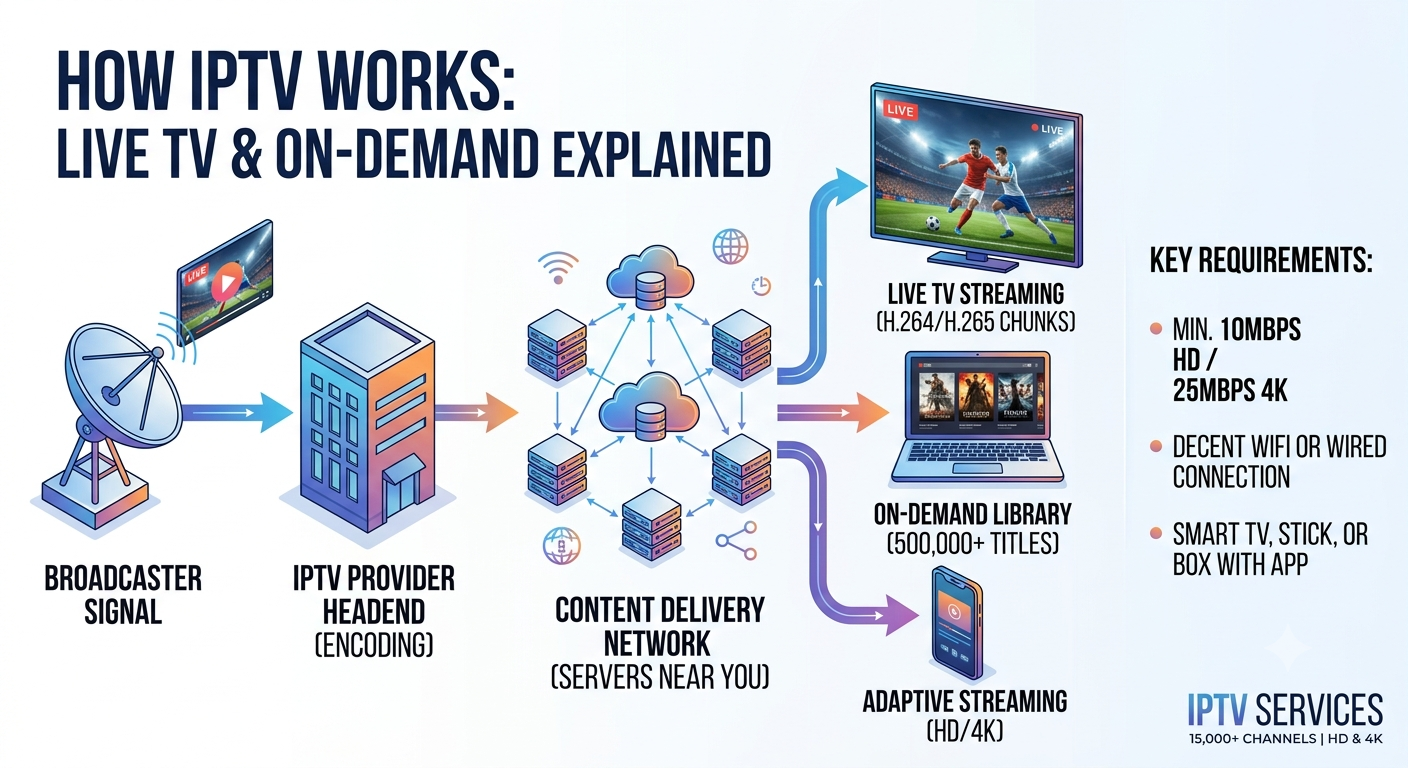
Live TV starts with the signal coming in from the broadcaster. The provider picks it up through satellite or fiber and brings it into a setup called a headend. That’s just the place where all the live feeds land first.
The raw signal is huge. Way too big for a normal home internet line. So the provider compresses it using something called encoding. Formats like H.264 and H.265 make the video much smaller while the picture still looks good. Then the stream gets cut into little chunks that are only a few seconds long and sent out one after another.
Those chunks don’t come from one machine. A good IPTV provider has servers in lots of different places so someone in Texas isn’t pulling video from a server way over on the other coast. This network of servers is called a content delivery network. A closer server means faster loading and less freezing.
Your app collects the chunks and stitches them back together in order. It happens so fast you would never notice. News, talk shows, cartoons, movies airing right now, they all reach you just a few seconds after the original broadcast.
How On-Demand Content Works?
On-demand is easier to understand. Nothing is airing live. The movie or series is already saved on the provider’s servers and when you press play the server just starts sending the file to you.
You get to control all of it. Pause, skip ahead, rewind, quit halfway and finish tomorrow. The provider usually saves each title in a few different quality levels. One for slow internet, one for medium and one for fast HD or 4K. Your app checks your speed and switches between them by itself. That is why a movie doesn’t usually just stop when your wifi acts up for a second. It gets a bit blurry for a moment and then fixes itself. The name for this is adaptive streaming.
Storing 500,000 titles takes serious space but the bigger job is organizing them. Every title needs a name, a poster, a short description, a language and a category or you’ll be scrolling forever. Some providers skip this part and the library turns into a mess. A good IPTV provider takes it seriously because nobody wants to search for twenty minutes just to find one movie.
Live and On-Demand in One App
Most people think of live TV and on-demand as two separate worlds but they usually sit inside the same app. Behind the scenes there are different systems handling each one but you only see one menu.
A lot of providers also keep recordings of live shows for a little while after they air. So if you missed something last night you can just go back and watch it. No DVR to buy and no recording to set up. Not every provider does this well though so check before you sign up.
Why Does Picture Quality Depend on Your Internet Too?
Even the best IPTV provider can’t fix a weak connection at your house. Rough numbers are about 5 to 10 Mbps for one HD stream and around 25 Mbps for 4K. If three people are watching different things at the same time you have to add it all up.
A wired cable from the router to your TV works better than wifi most of the time. Keeping the router out in the open helps too and restarting it once in a while fixes more problems than you’d expect. Also try not to run big downloads while someone is watching in 4K because that alone can cause buffering.
When buffering happens people usually blame the provider but it’s often something at home. Sometimes it really is the provider though, especially a cheap one that squeezed too many people onto too few servers. Both happen so it helps to know which one you’re dealing with.
Devices That Work with IPTV USA Service
You don’t need fancy gear. Most people in the USA watch on a smart TV, a streaming stick, an Android box or a small box made for IPTV. Phones, tablets and laptops work too so you can watch in bed or in the kitchen or on a trip.
Setup is pretty quick. Install the app, type in the login the provider gave you and the channels and library load up. Most people are watching within ten minutes. If it gets stuck somewhere that’s when good support saves you.
What Makes a Good IPTV Provider USA?
Not all providers are the same and you’ll notice fast. Library size matters but only if it’s sorted well enough to find things. Quality matters too. Some places put 4K on their website and then the stream looks barely better than normal, so test it yourself before paying for a long plan. Stability during busy evening hours is another big one because that’s when everybody is watching at once and weak servers start to struggle.
Support is the one people forget until they need it. When your stream dies you want a real person to answer and not an email that shows up three days later. Easy setup on the device you already own and clear pricing with no surprise charges matter as well. A provider that gets most of these right will save you a lot of stress. The cheap ones that skip half of them usually cost you more headache than they save in money.
Why Families Pick IPTV Services as Their IPTV Provider?
IPTV Services is made for families in the USA who want more to watch without the cable bill. As an IPTV provider it offers 15,000 channels covering news, movies, kids shows, entertainment, lifestyle and a bunch of different languages and communities. On top of that there are 500,000 on demand titles so there’s always something to watch when you’re not feeling live TV.
Streams come in HD and 4K depending on your device and your internet so a big screen looks sharp. And there’s a support team to help with setup and fix things when they go wrong. That matters more than most people think. Great content means nothing if the stream won’t load and nobody answers.
For anyone hunting for a dependable IPTV provider USA, IPTV Services puts live TV and on-demand content together in one place.
Picking the Right IPTV Provider for Your Home
Now the whole thing probably makes more sense. The provider picks up live signals, shrinks them, sends them through servers near you and your device puts it all back together in a few seconds. On-demand titles are just saved files waiting for you to press play. You require a steady internet and a device that runs the app.
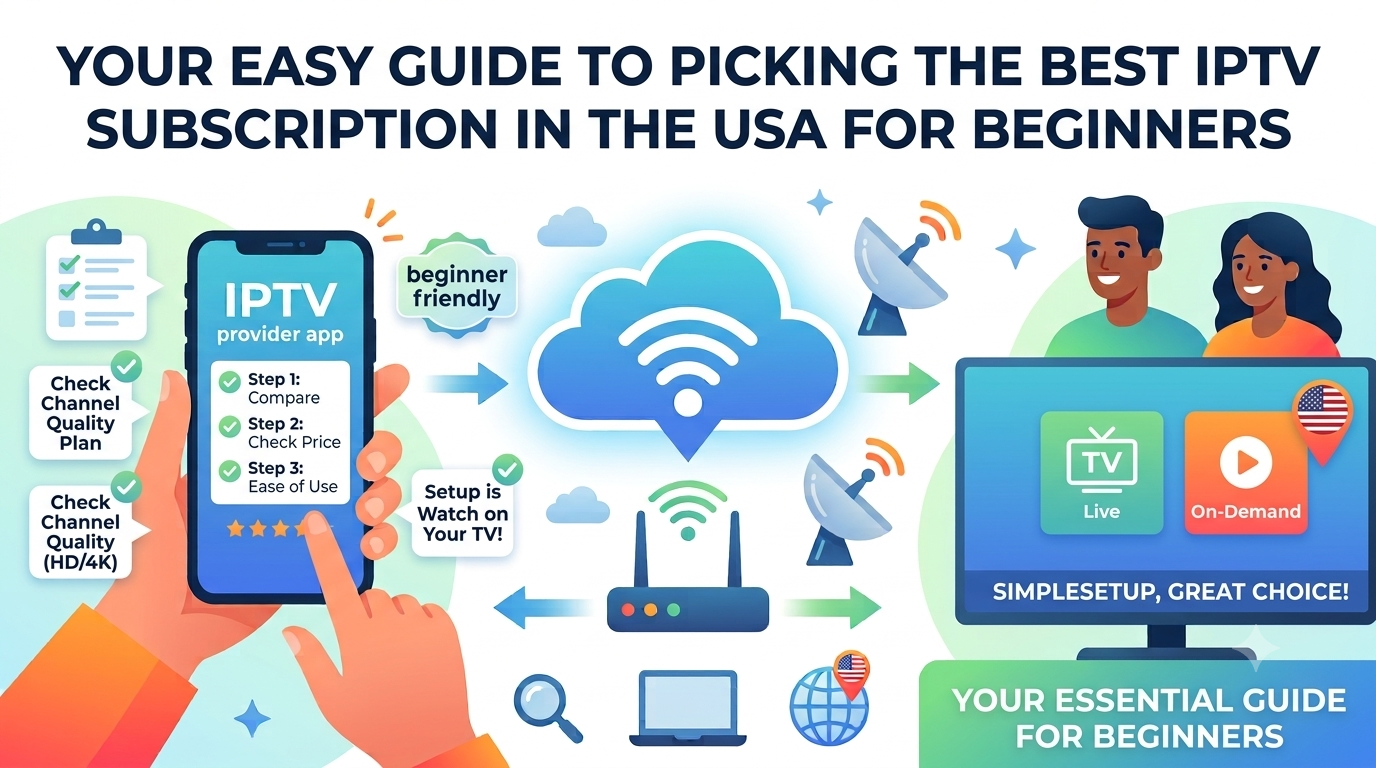
When you compare any IPTV provider look at library size, picture quality, server stability and support. Those four things tell you most of what you need. Take your time, test it out and choose the one that fits how your family really watches. IPTV USA gets better every year and honestly leaving cable behind has never been easier.